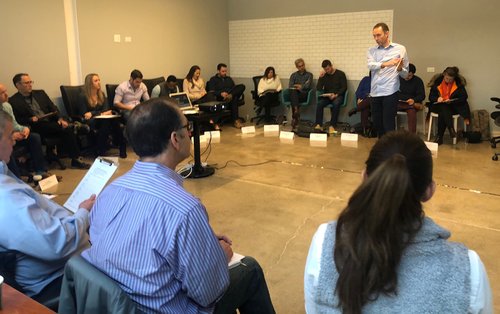
Last month, we held our annual workshop on Vision, Mission, and Values (VMV). In addition to the half day we were with the companies and their teams, we’ve spent quite a few hours after the workshop discussing their drafts, exchanging ideas and suggestions, and coaching them along the way. As it happens every year, several important lessons have emerged. Process matters more than outcome. Vision, mission, and values statements are hard to craft and it takes a while for them to be “done.” Because leaders of growth-stage companies are often driven people, there’s a desire to get to the light at the end of the tunnel. But we’ve seen year after year that multiple voices, word-smithing, and seeking the essence of the company all take time. At some point of course, the VMV do need to be published. Yet, even then, they’re not “done.” Team involvement helps. Not only does it provide more ideas and well-rounded perspectives, having the team involved also builds camaraderie and togetherness. We believe it’s vital that the founders drive the vision statement since they’re most likely to be with the company indefinitely, but getting the leadership team’s input on all three statements – especially the values – goes a long way. The greatest confusion is with vision and mission. In our view, a vision statement is an idealistic, unattainable point in the future that inspires people. It’s like the horizon or north star. We believe the vision should be noun-focused, explaining what the company wants to become in the future. On the other hand, a mission is more tangible, a purpose statement that describes what the company does today and will do in the near future. Therefore, we believe the mission should be verb-focused, explaining the overarching thing that the company does. Values that are explained have greater impact. As the years go by, we’ve seen fewer companies rely on single-word core values like “respect,” “integrity,” and “fun.” Instead, they’re elaborating on what those words mean for that particular company and its people. Using single words leaves too much to interpretation while creating phrases and/or paragraphs allows for more detail and personality to shine through. Words matter. In virtually every example we’ve seen, a significant amount of time is spent finding the right words…and it’s worth it for two reasons. First, effective word-finding and editing helps keep the statements concise yet descriptive. Second, although we use a lot of logic in crafting VMV statements, we’re also affected by emotions in the moment, often in a subconscious way. Letting drafts sit for a while and returning to them often shines a new light on the words and helps us see them differently, stimulating fresher and more accurate options. When done well, the Vision, Mission, and Values statements can serve many purposes. They inspire our teams, help us make decisions, attract the right talent and customers, define our culture, and help us stay aligned. Ultimately, they may be the most powerful set of leadership tools we have to move people in the direction we’re going.